

 Feed back
 Privacy Policy
LawPulse
The $1.7 trillion student loan debt burden in America has created a financial emergency for 45 million borrowers. With college costs rising 169% since 1980 while wages stagnated, graduates face repayment periods stretching decades. This comprehensive guide examines proven student loan debt relief strategies including federal loan forgiveness programs and income-driven repayment plans that can provide real solutions.
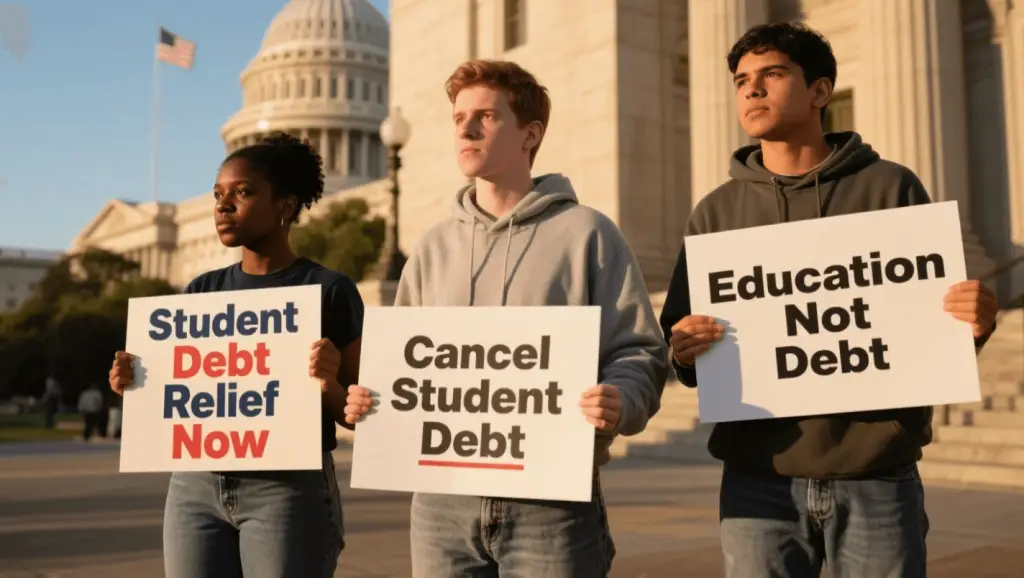
Federal Reserve data reveals student loan debt now exceeds all other consumer debt except mortgages, with 11% of borrowers in default. The average graduate owes $37,000, though many professional degree holders carry balances exceeding $200,000. This debt delays major life milestones - 83% of millennials report postponing homeownership due to student loans according to the National Association of Realtors.
The shift from grant-based aid to loans began with the 1965 Higher Education Act. By 2010, 60% of aid came through loans compared to just 20% in 1970. The 2008 recession accelerated the crisis as states cut university funding by 16% per student, forcing tuition hikes. For-profit colleges exacerbated the problem, accounting for 35% of federal loan defaults despite enrolling only 9% of students (Department of Education data).
The Public Service Loan Forgiveness (PSLF) program remains the most comprehensive student loan debt relief strategy, forgiving remaining balances after 10 years of qualifying payments for government and nonprofit workers. Teachers serving low-income schools can access up to $17,500 in forgiveness through the Teacher Loan Forgiveness Program, while income-contingent plans offer forgiveness after 20-25 years of payments.
While early PSLF rejection rates reached 99%, recent program improvements have increased approvals to 72% for complete applications (Federal Student Aid data). Successful applicants like David R., a social worker, emphasize submitting annual employment certification forms and using the PSLF Help Tool to track qualifying payments. Common mistakes include using ineligible repayment plans or working for non-qualifying employers.
Income-driven repayment plans calculate payments as 10-20% of discretionary income, with forgiveness after 20-25 years. The REPAYE plan offers the most generous terms, capping payments at 10% of income and providing interest subsidies. Borrowers must recertify income annually - failure to do so can increase payments up to tenfold, as occurred for 28% of IDR participants in 2022 (Consumer Financial Protection Bureau report).
Married borrowers often benefit from PAYE's separate spousal income consideration, while REPAYE always includes spouse income. Those pursuing Public Service Loan Forgiveness should choose PAYE or IBR to minimize payments during their 10-year term. The new SAVE plan launching in 2024 will reduce payments further by increasing the poverty guideline exclusion by 225%.
The Higher Education Act provides defenses against collection for defrauded borrowers, with the Department of Education approving $14.5 billion in borrower defense claims since 2021. All federal loan borrowers qualify for administrative forbearance during financial hardship, while private loan protections vary by state. The CFPB handles complaints about servicer misconduct, resolving 180,000 student loan issues annually.
Effective student loan debt relief strategies often combine multiple approaches. Example: A public defender could use PAYE to minimize payments while pursuing PSLF, then apply for borrower defense if their law school misrepresented employment statistics. Consolidating FFEL loans makes them PSLF-eligible, while keeping older loans on separate IDR plans preserves earlier payment counts toward forgiveness.

The Biden administration's new SAVE plan will reduce undergraduate payments from 10% to 5% of discretionary income starting July 2024. Proposed legislation like the Student Loan Forgiveness Act would provide $10,000 in across-the-board forgiveness, while the College Transparency Act aims to prevent future crises by tracking program outcomes. Ongoing Supreme Court cases may determine the legality of broader forgiveness initiatives.
Borrowers should annually review their repayment plan options as terms improve. Creating a studentaid.gov account provides access to official payment counts and servicer communications. Those anticipating forgiveness should maintain tax reserves - while PSLF remains tax-free, IDR forgiveness may create taxable income. Refinancing federal loans privately should only be considered by those certain they won't need federal protections.
While the student loan debt crisis remains daunting, strategic use of available relief programs can significantly reduce burdens. By understanding all federal forgiveness and repayment options, documenting all interactions with servicers, and staying informed about policy changes, borrowers can navigate toward financial freedom. The key is taking proactive, informed action rather than becoming paralyzed by the size of the challenge.
Disclaimer: This content provides general information about student loan debt relief strategies and is not professional financial advice. Consult a qualified expert before making decisions about your student loans. The author and publisher disclaim liability for any actions taken based on this information.
Alexandra Pierce
|
2025.08.06
