

 Feed back
 Privacy Policy
LawPulse
Every 32 seconds, a child under 13 is involved in a car crash in the United States (NHTSA 2022). Understanding 49 U.S.C. § 30119 and child safety seat legal enforcement by state could mean the difference between life and death for young passengers. This comprehensive guide breaks down federal requirements, examines state-by-state variations in booster seat age limits, and reveals the science behind pediatric injury prevention standards that save thousands of children annually.

Enacted as part of the 1966 National Traffic and Motor Vehicle Safety Act, 49 U.S.C. § 30119 establishes the framework for child restraint systems nationwide. Contrary to popular belief, this federal statute doesn't specify exact age or size requirements but creates financial incentives for states to implement their own child safety seat legal enforcement by state programs. The law's effectiveness is demonstrated by a 58% reduction in child vehicle fatalities since its implementation (IIHS 2021).
The federal government distributes approximately $600 million annually in highway safety grants tied to compliance with 49 U.S.C. § 30119 (DOT 2023). States must meet three criteria to qualify: 1) Maintain child restraint laws covering all children under 16, 2) Require appropriate car seats/boosters based on age/size, and 3) Conduct regular public education campaigns about pediatric injury prevention measures.
A 2023 analysis by the Governors Highway Safety Association revealed staggering disparities in child safety seat legal enforcement by state:
Primary enforcement states (32 total) allow officers to stop vehicles solely for child restraint violations, resulting in 23% higher compliance rates according to Johns Hopkins research. Secondary enforcement states (18 total) can only cite violations during other traffic stops, creating dangerous loopholes in pediatric injury prevention efforts.
Children's iliac bones (hip structure) don't fully develop until ages 10-12, making proper booster seat age limits critical. A Children's Hospital of Philadelphia study found improperly restrained children experience:
Safe Kids Worldwide's research-backed assessment determines when children can safely transition from boosters:
NHTSA data shows 85% of children fail this test before age 10, validating the need for extended booster seat age limits.
The American Academy of Pediatrics' 2023 guidelines recommend:
Manufacturer specifications trump all guidelines - 72% of seats are installed incorrectly according to National Safety Council audits.
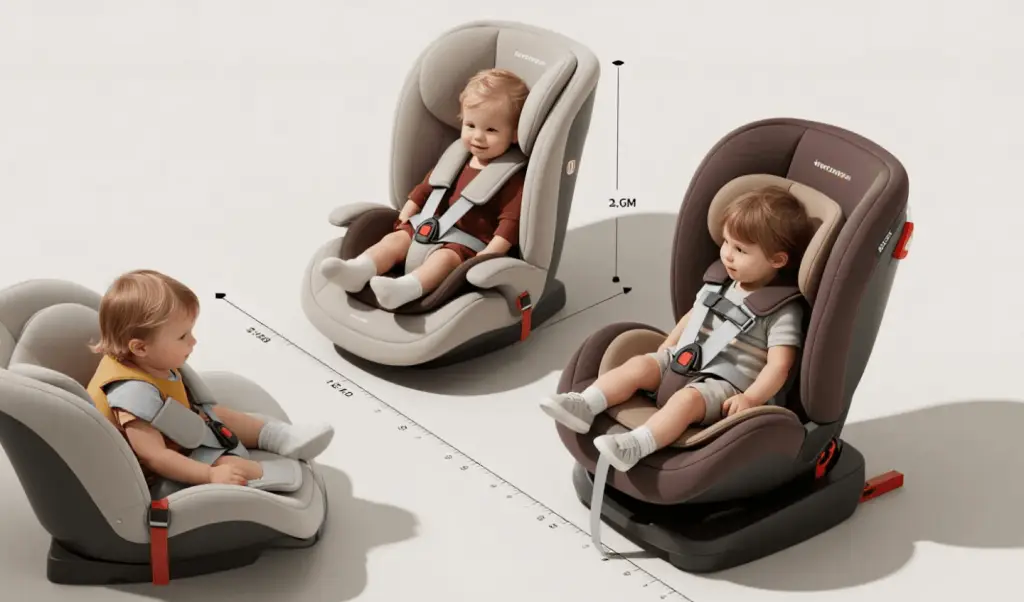
Beyond safety risks, violating child safety seat legal enforcement by state statutes carries severe consequences:
State
| Fine Amount | Additional Penalties | |
|---|---|---|
| California | $100-$250 | 1 DMV point |
| Texas | $25-$250 | Court costs |
| New Jersey | $75 | Community service |
Insurance implications are equally severe - claims involving improperly restrained children face 37% higher denial rates (Insurance Institute 2023).
Q: Can I use European car seats that meet different standards?
A: No - 49 U.S.C. § 30119 requires compliance with FMVSS 213 standards. Foreign seats lack proper crash testing for US vehicles.
Q: Do ride-share vehicles have different requirements?
A: No - All 50 states apply the same child safety seat legal enforcement by state standards to taxis and ride-shares.
Q: Are there medical exemptions to booster seat requirements?
A: Only 12 states allow exemptions with physician documentation, but none waive pediatric injury prevention requirements entirely.
While understanding 49 U.S.C. § 30119 and navigating varying child safety seat legal enforcement by state requirements is complex, the stakes couldn't be higher. Proper use of age-appropriate restraints reduces fatal injury risk by 71% for infants and 54% for toddlers (CDC). By treating booster seat age limits as minimum standards rather than targets, and embracing the science of pediatric injury prevention, we can virtually eliminate preventable child passenger deaths.
【Disclaimer】The information provided regarding Child Safety Seat Requirements and Legal Enforcement is for general guidance only and does not constitute legal or professional advice. Regulations change frequently and vary by jurisdiction. Always consult official state transportation authorities or certified child passenger safety technicians for current requirements. The author and publisher disclaim any liability for actions taken based on this content.
Emma Carter
|
2025.08.06
