

 Feed back
 Privacy Policy
LawPulse
In today's competitive American workforce, overtime pay violations have reached epidemic proportions. According to 2023 Department of Labor statistics, wage theft claims involving overtime violations increased by 17% year-over-year, with over $230 million recovered for employees. This comprehensive guide examines how employees can successfully navigate employment law overtime pay disputes while helping employers understand critical wage regulations and worker compensation requirements under the Fair Labor Standards Act (FLSA).

The Fair Labor Standards Act establishes clear employment law standards for overtime compensation, mandating time-and-a-half pay for hours worked beyond 40 in a workweek. However, the DOL reports that 42% of misclassification cases stem from employers misunderstanding the salary basis test, which currently requires employees to earn at least $684 weekly ($35,568 annually) to potentially qualify for exempt status. The duties test further complicates matters, as job titles alone don't determine exemption status - actual job responsibilities dictate classification.
A 2022 class action lawsuit against national retailer MegaRetail demonstrated how employment law overtime pay disputes can escalate. Store managers classified as exempt worked 55+ hour weeks without overtime pay, despite spending 80% of their time on non-managerial tasks like stocking shelves. The $12.3 million settlement highlighted how wage regulations require analysis of actual job duties rather than job titles alone.
DOL data reveals that misclassification accounts for 61% of all wage regulations violations, with technology companies (32% of cases) and healthcare providers (28%) being the most frequent offenders. A common scenario involves employers classifying IT support staff as exempt computer professionals despite their work not meeting the FLSA's stringent creativity requirements for this exemption.
In TechLogic Corp's 2021 worker compensation case, the lack of proper time tracking systems led to $4.2 million in back wages. Employees regularly worked through lunch breaks and after hours, but the company's manual spreadsheet system failed to capture these hours. The court ruled that employers must implement reliable systems to track all hours worked, including unauthorized overtime.
To minimize employment law overtime pay disputes, leading labor attorneys recommend quarterly pay practice audits, digital timekeeping systems with biometric verification, and comprehensive manager training on wage regulations. Particular attention should focus on properly classifying hybrid roles that combine exempt and non-exempt duties, which account for 38% of misclassification cases according to SHRM research.
Workers denied rightful overtime compensation under US labor laws can pursue multiple remedies. The DOL's Wage and Hour Division resolved 85% of claims within 6 months in 2023, with average recoveries of $3,200 per employee. For larger worker compensation claims, collective actions under FLSA Section 216(b) allow groups of employees to sue jointly, often resulting in six- or sevenfigure settlements when systemic violations exist.
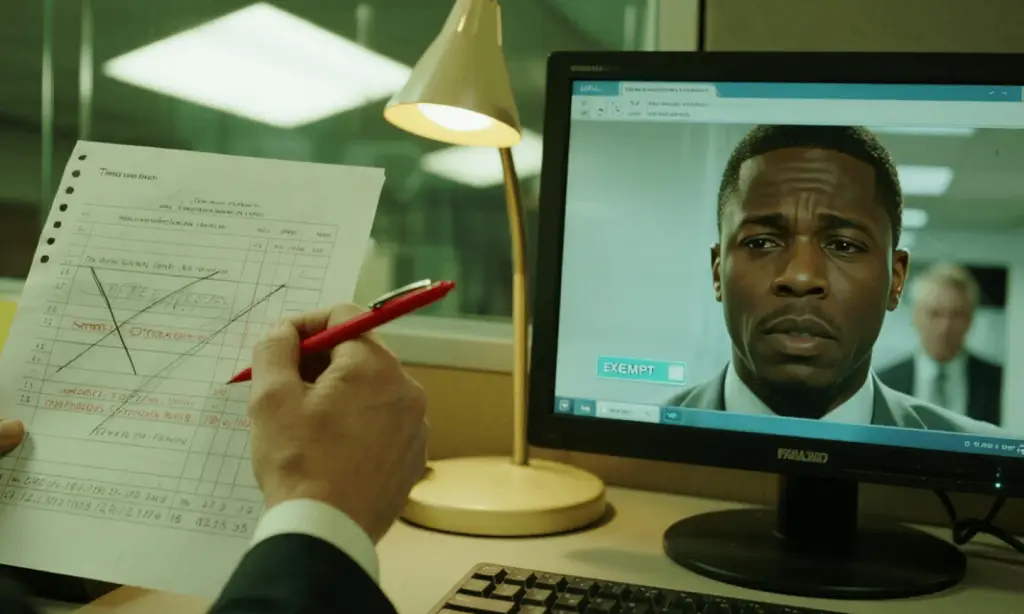
No. While the FLSA covers most workers, exemptions exist for certain executive, administrative, professional, computer, and outside sales positions that meet specific salary and duties tests. However, DOL statistics show that 29% of exempt classifications are incorrect.
Documentation is key. Keep personal records of work hours, save communications about overtime requests, and gather witness statements. In employment law overtime pay disputes, courts often accept alternative evidence when employers fail to maintain proper records.
File a complaint with the DOL or consult an employment attorney. The FLSA provides for back wages plus liquidated damages equal to the amount owed, effectively doubling your recovery in successful cases.
Disclaimer: This content regarding Overtime Pay Disputes Under US Federal Labor Laws is for informational purposes only and does not constitute legal advice. Consult qualified legal professionals for guidance on specific situations. The author and publisher disclaim any liability for actions taken based on this information.
Michael Harrison
|
2025.08.06
