

 Feed back
 Privacy Policy
LawPulse
The American judicial system relies heavily on domestic violence restraining orders as a primary legal remedy for intimate partner violence victims. Under Family Law provisions, these court orders attempt to create physical and legal barriers between abusers and survivors. However, the complex reality of obtaining and enforcing protection orders reveals systemic gaps that Victim Advocacy groups and Emergency Shelter Services struggle to address. This comprehensive analysis examines the legal framework, implementation challenges, and potential solutions surrounding domestic violence protection in U.S. courts.
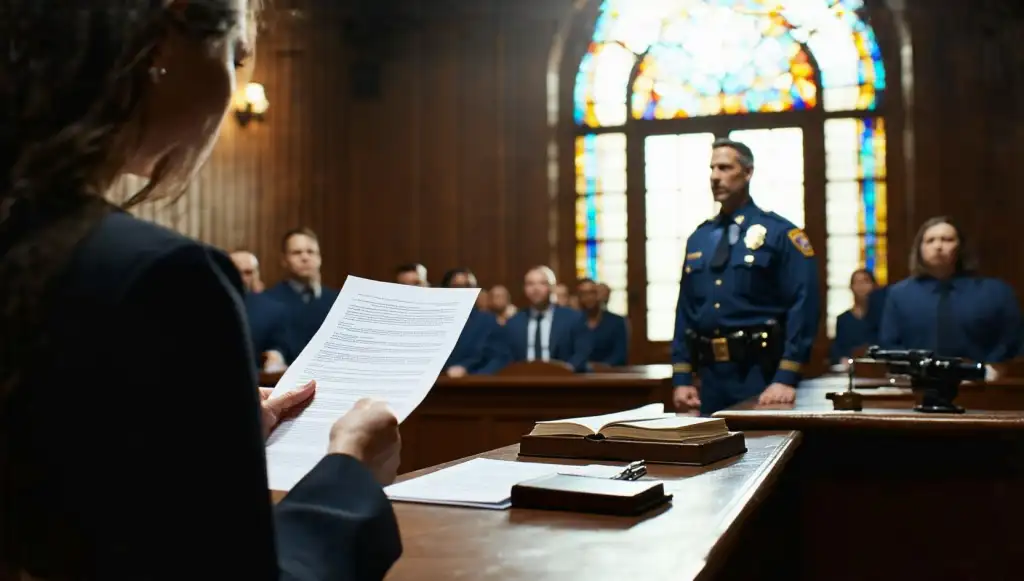
The foundation of domestic violence restraining orders in the United States stems from state-level Family Law statutes, supplemented by federal legislation like the Violence Against Women Act (VAWA). All 50 states maintain distinct classification systems for protection orders, typically differentiating between emergency (ex parte) and permanent orders. Emergency orders, granted without the respondent's presence, provide immediate but temporary protection, usually valid for 14-30 days until a full hearing. Permanent orders require evidentiary hearings and can remain effective for years, with provisions extending to child custody, financial support, and firearm restrictions.
The petition process demonstrates significant variation across jurisdictions. While some states like California allow online filing through the Family Law court portal, others require in-person submissions. According to National Center for State Courts data, approximately 70% of temporary orders convert to permanent protections when properly served and uncontested. However, enforcement mechanisms show dramatic differences, with urban counties reporting 40% higher compliance rates than rural areas according to Department of Justice statistics.
The decentralized nature of Family Law creates a patchwork system for domestic violence restraining orders. Analysis of court records reveals that approval rates for emergency orders range from 58% in Mississippi to 94% in Massachusetts. These disparities correlate with several legislative factors:
A 2022 Urban Institute study found that states with standardized Family Law forms and dedicated domestic violence courts show 32% higher successful enforcement rates. The Violence Policy Center reports that protection orders reduce repeat violence by 80% when combined with Victim Advocacy support and Emergency Shelter Services.
Despite statutory provisions in Family Law, numerous challenges hinder access to domestic violence restraining orders. The National Domestic Violence Hotline identifies three primary barriers:
Specialized Victim Advocacy programs demonstrate measurable success in overcoming systemic barriers. The National Network to End Domestic Violence reports that survivors utilizing advocacy services experience:
These programs provide court accompaniment, safety planning, and systems navigation - particularly crucial for marginalized populations. A 2021 University of Pennsylvania study found that LGBTQ+ survivors using Victim Advocacy services were 3.5 times more likely to obtain lasting protection orders.
Emergency Shelter Services constitute a vital component of comprehensive protection under Family Law systems. National data reveals troubling disparities:
The presence of Emergency Shelter Services directly impacts protection order success. A Maryland study found that survivors with shelter placement maintained order compliance at 89% versus 54% for those without housing support.
Innovative jurisdictions are bridging Family Law and social services through:
These models demonstrate 30-45% higher protection order efficacy rates according to Urban Institute evaluations. The integration of Emergency Shelter Services with legal processes addresses the critical window of vulnerability immediately after order issuance.

Enhancing domestic violence restraining orders requires multipronged Family Law reforms:
Issueth>
| Proposed Solution | Projected Impact | Inconsistent enforcement | Mandatory officer training | +35% compliance (PERF) |
|---|---|---|---|---|
| Cross-border recognition | National registrytd> | +50% enforcement (NIJ) | ||
| Shelter shortages | Federal funding increases | 20,000+ beds (HUD) |
Digital innovations are transforming domestic violence restraining orders:
Arizona's e-protection order system reduced processing time from 72 hours to 6 hours while maintaining 94% approval rates. Such technological solutions, combined with Victim Advocacy support and Emergency Shelter Services, represent the future of domestic violence protection under Family Law.
Conclusion
The effectiveness of domestic violence restraining orders in U.S. courts depends on coordinated improvements across Family Law systems, Victim Advocacy networks, and Emergency Shelter Services. While protection orders remain essential legal tools, their impact requires addressing systemic barriers through policy reforms, technological integration, and victim-centered approaches. Continued evaluation and adaptation of these systems will determine their ability to provide genuine safety for survivors nationwide.
Disclaimer: The information provided about Domestic Violence Protection Orders in U.S. Courts is for educational purposes only and does not constitute legal advice. Readers should consult qualified professionals regarding specific situations. The author and publisher disclaim liability for any actions taken based on this content.
Johnson
|
2025.08.06
