

 Feed back
 Privacy Policy
LawPulse
Distracted driving remains a critical public safety issue across American roadways, with the National Highway Traffic Safety Administration (NHTSA) Guidelines reporting approximately 3,142 fatalities annually from distraction-affected crashes. As states like New York implement increasingly stringent cell phone use while driving laws in New York, legal professionals and insurers continue debating their actual impact on reducing personal injury claims. This comprehensive analysis examines the empirical evidence behind legislative interventions and their real-world effects on accident compensation cases.
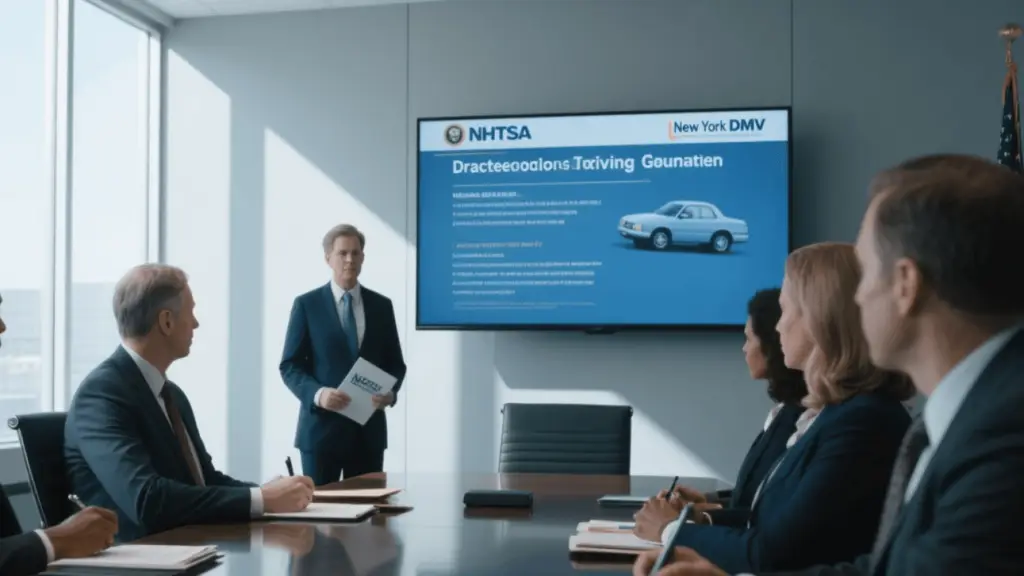
The National Highway Traffic Safety Administration (NHTSA) Guidelines establish a comprehensive framework that states reference when crafting distracted driving legislation. Their 2013 policy recommendations emphasized three key intervention strategies: primary enforcement laws, public awareness campaigns, and technological countermeasures. These guidelines have become particularly influential through their connection to federal highway funding allocations, creating strong incentives for state compliance.
Recent data from NHTSA (2022) reveals that states adopting all three recommended interventions saw 17% greater reductions in distraction-related crashes compared to partial implementers. This correlation suggests the guidelines' multi-pronged approach effectively addresses different aspects of the distracted driving epidemic, from behavioral deterrence to technological prevention.
New York's progressive implementation of cell phone use while driving laws in New York provides a compelling case study in legislative evolution. The state's 2001 handheld ban represented early recognition of the problem, while subsequent amendments like the 2011 texting prohibition and 2019 hands-free mandate demonstrate ongoing refinement. Enforcement data from the NYS DMV shows citation rates increasing 43% following the 2019 hands-free law implementation, indicating enhanced police prioritization of these violations.
What makes New York's approach distinctive is its integration of graduated penalties. First offenses carry $50-$200 fines, while subsequent violations within 18 months trigger $50-$2 fines plus mandatory driver responsibility assessments. This escalating penalty structure appears effective - NYPD reports second offenses account for just 12% of total distracted driving citations.
Analysis of personal injury claims data reveals complex relationships between distracted driving laws and accident rates. While New York saw a 12% reduction in distraction-related crashes post-2019, the Insurance Information Institute notes more modest 6-8% decreases in corresponding injury claims. This discrepancy suggests that while accidents may be declining, the severity of remaining incidents could be increasing - a theory supported by NHTSA data showing rising injury severity scores in distraction-related crashes.
Insurance claim data from 2015-2022 shows particularly interesting patterns in litigation frequency. Despite fewer overall claims, the percentage of disputed cases rose from 18% to 27%, indicating increased challenges in proving distraction as a causal factor. This trend complicates straightforward assessments of legislative effectiveness based solely on claim volume reductions.
The insurance sector has responded to evolving traffic enforcement policies with innovative approaches to risk assessment and claims management. Major insurers now routinely incorporate several data points when evaluating personal injury claims:
These forensic approaches have created a paradoxical situation where claims may be decreasing in volume but becoming more complex and expensive to resolve. The average claim duration for distraction-related cases has increased from 98 days in 2015 to 147 days in 2022 according to industry reports.
Despite clear National Highway Traffic Safety Administration (NHTSA) Guidelines, practical enforcement of cell phone use while driving laws in New York and elsewhere faces multiple obstacles. The Governors Highway Safety Association identifies three primary challenges:
These implementation barriers create significant gaps between legislative intent and real-world impact. For example, while New York issues approximately 200,000 distracted driving citations annually, researchers estimate this represents less than 5% of actual violations based on observational studies.
Innovative solutions are emerging to address enforcement limitations of current traffic enforcement policies. Several jurisdictions are piloting advanced systems:
These technological interventions show particular promise for addressing the detection gap. Early data from New York's automated enforcement pilot program indicates a 31% reduction in observed phone use at monitored intersections, suggesting technology may overcome some human enforcement limitations.

The relationship between distracted driving legislation and personal injury claims proves more nuanced than simple cause-and-effect. While the National Highway Traffic Safety Administration (NHTSA) Guidelines provide an evidence-based framework, their effectiveness depends heavily on state-specific implementation of cell phone use while driving laws in New York and corresponding traffic enforcement policies.
Key findings from this analysis include:
1. Do stricter distracted driving laws lead to lower insurance premiums?
While stricter laws may reduce accident frequency, multiple factors influence premiums including claim severity, medical costs, and litigation trends. Some insurers offer discounts for telematics programs that monitor safe driving behaviors.
2. How effective are hands-free laws at reducing accidents?
NHTSA research indicates hands-free laws reduce handheld phone use by 30-40%, but cognitive distraction remains an issue. Comprehensive approaches combining legislation, enforcement and education show the best results.
3. What evidence do courts accept for distracted driving claims?
Courts increasingly accept phone records, telematics data, witness statements, and accident reconstruction analysis. The standard of proof varies by jurisdiction but is becoming more rigorous.
Disclaimer: The information provided regarding Impact of Distracted Driving Laws on Accident Claims is for general informational purposes only and does not constitute legal or professional advice. Readers should consult with qualified professionals regarding specific situations. The author and publisher assume no liability for actions taken based on this content.
Alexandra Carter
|
2025.08.08
